Armenian language
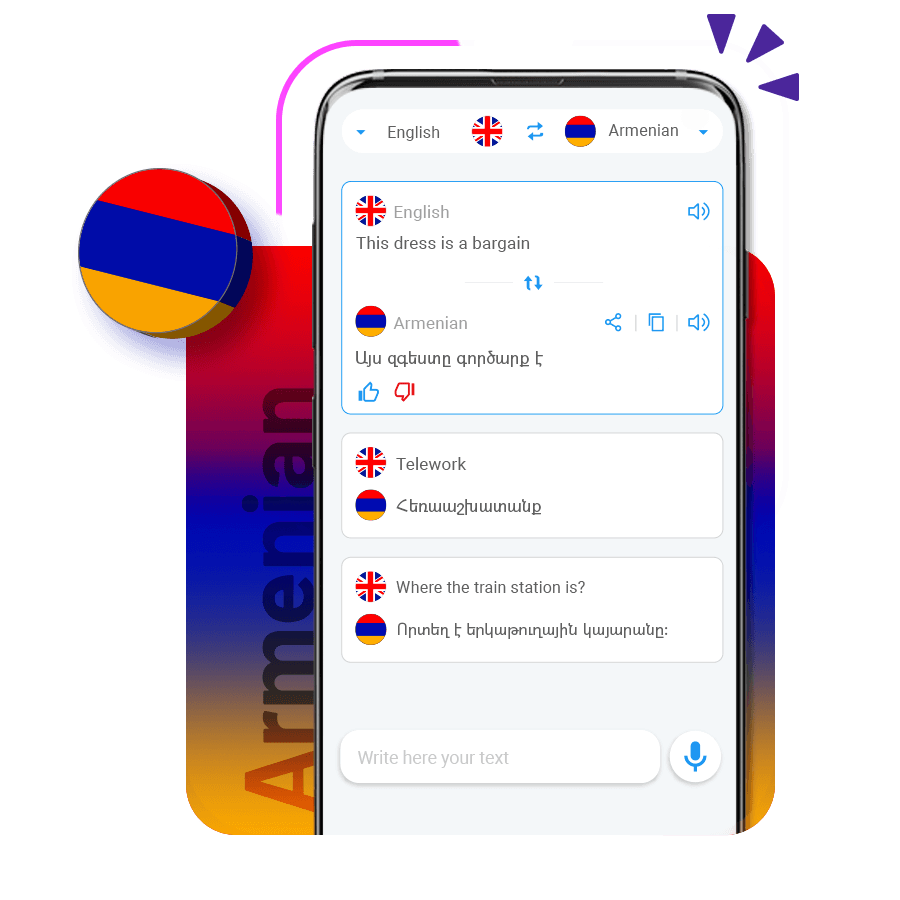
We help you translate your voice and any text into armenian and more than 125 languages.




Why is it important the Armenian language?

Where is it spoken?
Armenia – Russia – Georgia – Iran – Lebanon – Syria – Turkey – United States
There are also significant Armenian-speaking communities in France, Canada, Argentina, Spain, and Australia.

Number of speakers
Around 5.5 million native speakers.
More than 6 million people speak Armenian worldwide.

Language family
Indo-European language family – Armenian branch (an independent branch within the Indo-European languages)
The Armenian language is the official language of Armenia and one of the world’s oldest languages with a rich historical tradition. It has approximately 6 million speakers, distributed between Armenia and a large diaspora across Europe, the Middle East, Russia, and the Americas.
Translating into Armenian is essential for facilitating communication with businesses, institutions, students, and travelers. In addition, the Armenian community has a strong international presence, making Armenian translation a valuable tool for commerce, education, tourism, and cultural exchange.
One of the most remarkable features of Armenian is that it uses its own alphabet, created in the 5th century by Mesrop Mashtots, considered one of the world’s most unique and best-preserved writing systems.
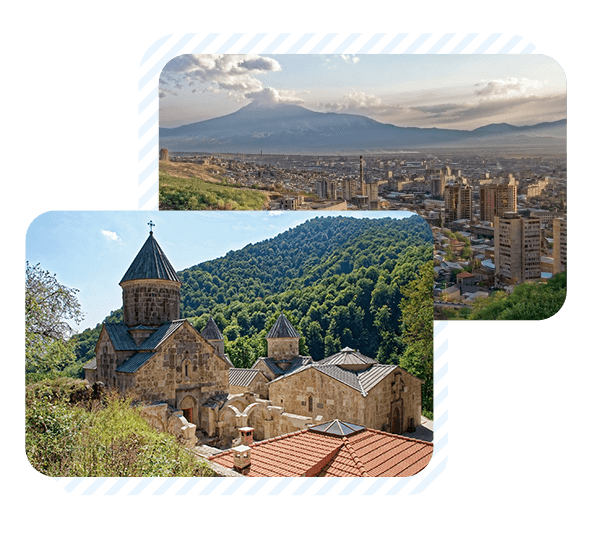
The most translated languages into Armenian


Learn to speak Armenian like a native
Advanced vocabulary
| Armenian | English |
|---|---|
| Կրթություն | Education |
| Մշակույթ | Culture |
| Գիտելիք | Knowledge |
| Ստեղծագործություն | Creativity |
| Հաջողություն | Success |
| Զարգացում | Development |
Other interesting facts about the Armenian language
- It has its own alphabet with more than 1,600 years of history. It was created in 405 AD by the monk, linguist, and scholar Mesrop Mashtots to translate religious texts and preserve Armenian cultural identity. It is still used today with virtually no changes.
- There are two main varieties. Eastern Armenian, spoken mainly in Armenia, and Western Armenian, used by much of the Armenian diaspora. The two varieties are largely mutually intelligible, although they differ in pronunciation, vocabulary, and spelling.
- Its alphabet is a national symbol. The Armenian alphabet is deeply connected to the country’s identity. There is even a monument to the alphabet near the town of Artashavan, where visitors can see giant sculptures of each of its letters.
- It has incorporated influences from many languages. Throughout its history, Armenian has borrowed words from Persian, Greek, Arabic, Turkish, Russian, and French, reflecting Armenia’s strategic location between Europe and Asia.
- It is highly valued by linguists. Because of its independent development and the preservation of many ancient features, Armenian is an important source for studying the evolution of the Indo-European languages.


Enhance global communication with your voice. Our AI translator convert speech into any language.
We support the Armenian language across multiple services
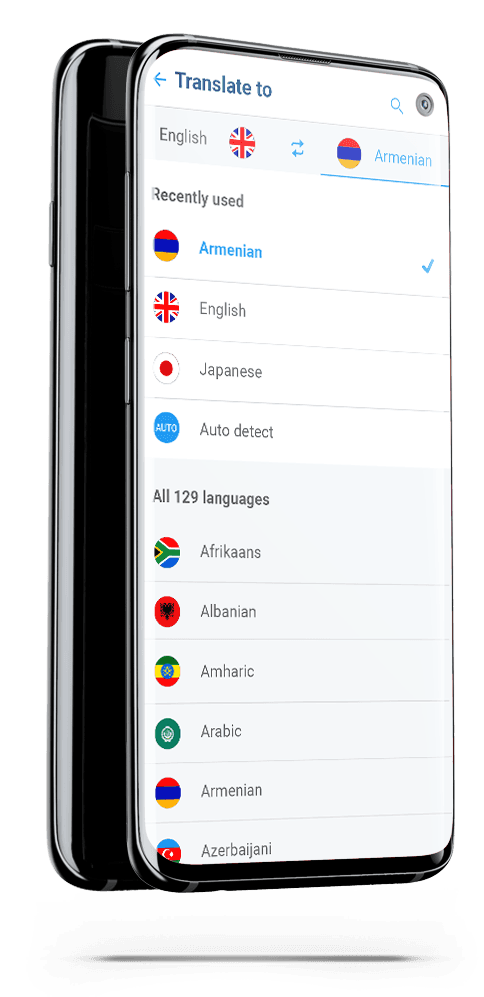

Audio and text translation
Translate into Armenian from more than 125 available languages.

Remote conversation translation
Speak and translate into Armenian remotely with people anywhere in the world.

Real-time translation
Speak freely. Translate Armenian instantly in real time.

Learning with smart books
Essential expressions, culture, verbs, travel, and technical language all in one place.

Translation audio playback (TTS)
Listen to the Armenian translation audio to improve your pronunciation.

Speech recognition (STT)
Speak freely, and your app will translate for you.


Enjoy the best advancements in artificial intelligence applied to translation
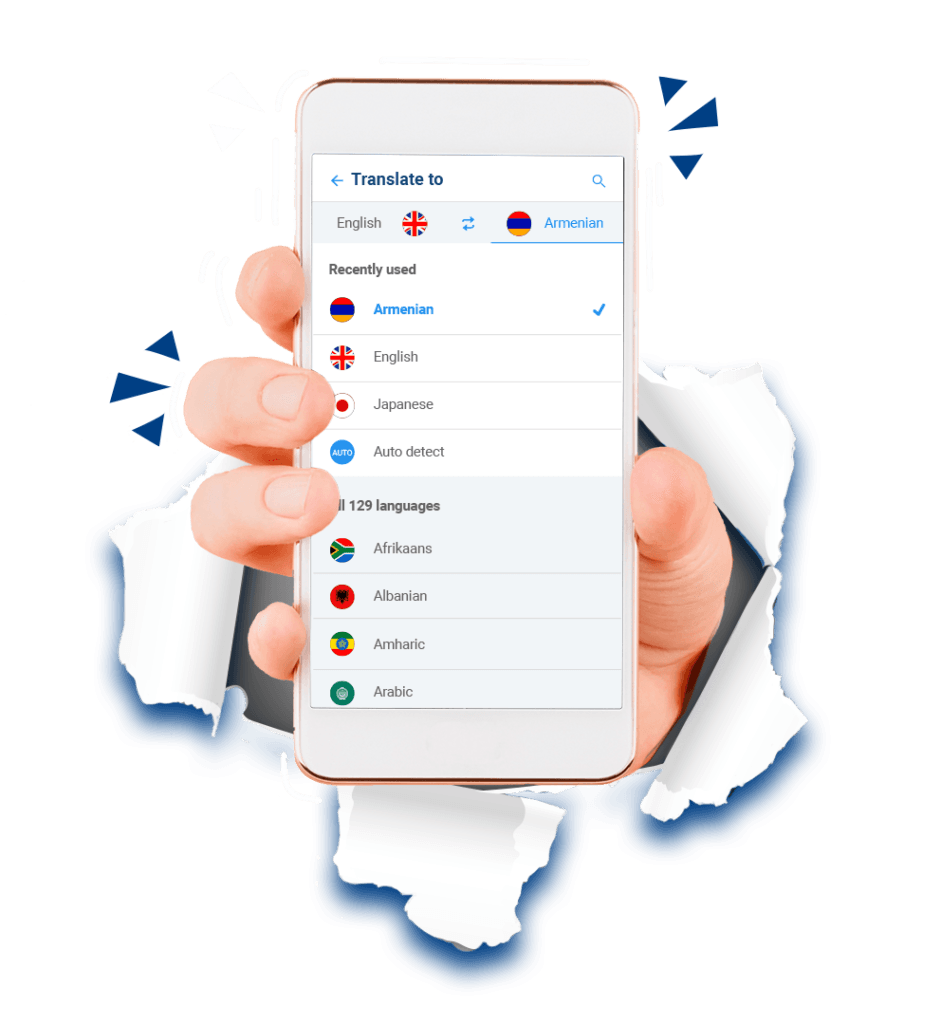
Translate to Armenian with the utmost