 English
Vocabulary is the muscle of a language: the more you train it, the stronger and more flexible your communication becomes. Today we’re diving into sports vocabulary in English, but we won’t stop at the typical words you already know like football or tennis.
At an intermediate level of English, this is the perfect time to start sounding more natural, understand native speakers better, and master those dreaded phrasal verbs. Get your mind ready, make yourself comfortable, and let’s start training this vocabulary!
Sports vocabulary – Intermediate level
The place where we play sports
In Spanish, we often use the word “field” or “court” for almost everything, but English is much more specific depending on the sport being played. Mixing up these terms is a very common mistake, so let’s clear it up:
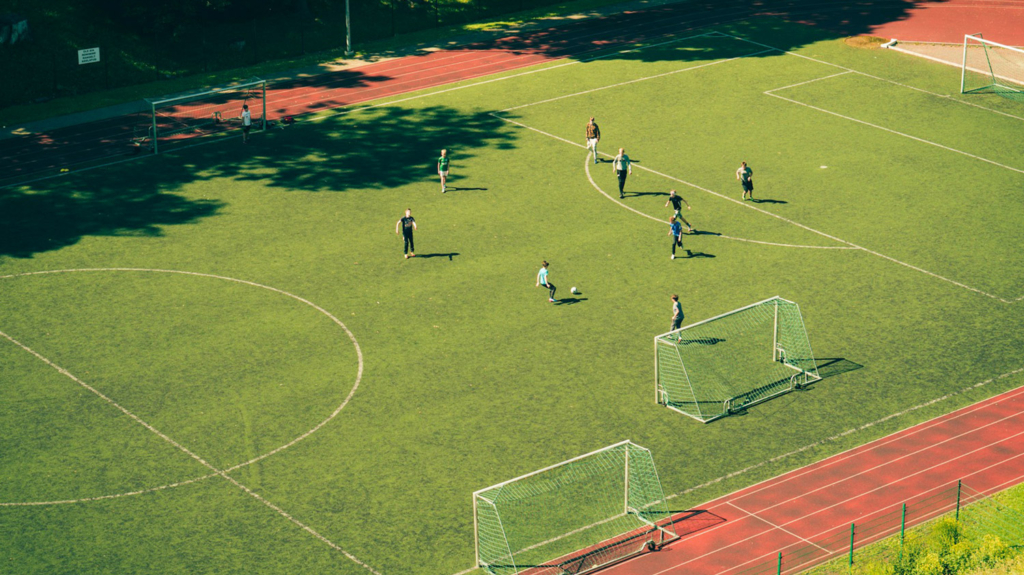
Pitch (or Field): A playing area, usually covered with grass, used for large team sports.

The referee walked onto the football pitch to check the grass.

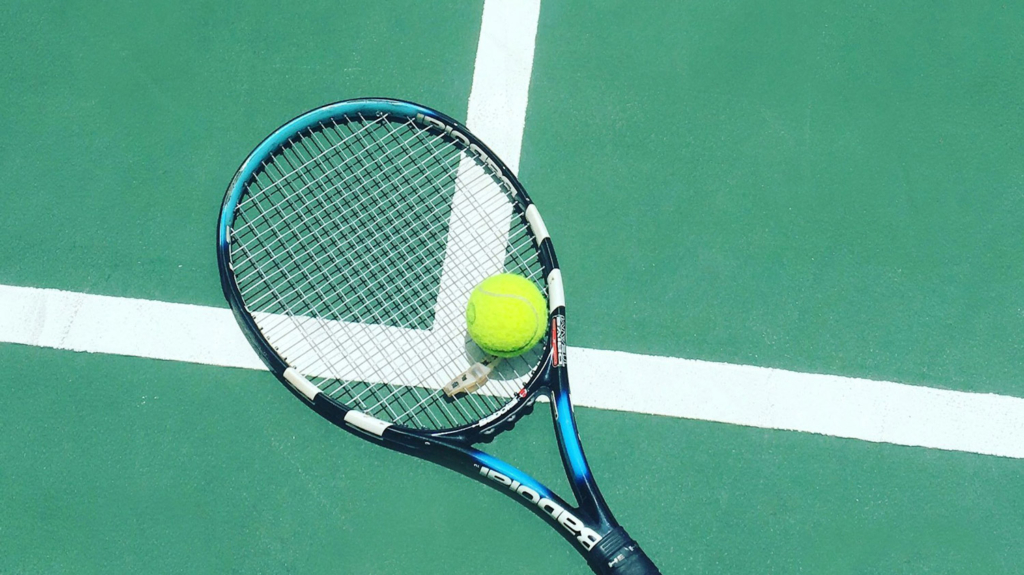
Court: It is used for sports played on surfaces marked by lines, whether indoors or outdoors, and that typically involve a net or baskets.
She spent the whole afternoon practicing her serve on the tennis court.
También se usa para basketball court o volleyball court.
Track: It is a track used for track and field or racing (such as car racing or cycling).
He runs around the athletics track every morning.

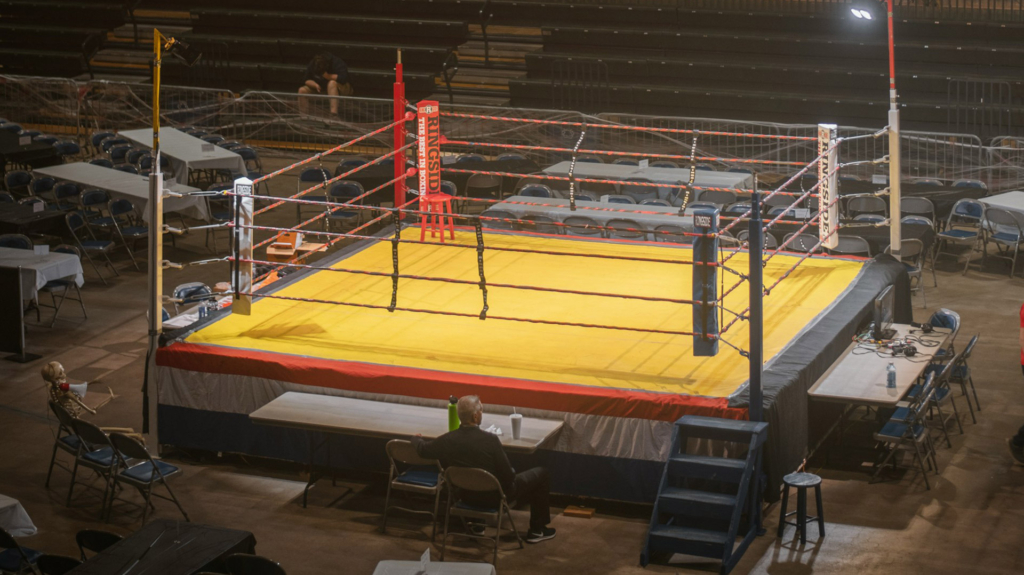
Ring: Interestingly, it means “ring,” but it refers to the square-shaped area where boxing or wrestling takes place.
The two boxers stepped into the ring, ready for the final round.
The same applies to basketball court or volleyball court.
Essential Equipment
To practice sports at an intermediate level, you need the right tools. Here are some key words that will enrich your vocabulary:
Racket: Used in tennis or badminton.
Club: Not just a social club—in sports, a golf club is the stick used to hit the ball.
Bat: Used in baseball or cricket.
Gear / Kit: Two common ways to refer to sports equipment or clothing. Gear is broader and includes protective equipment, while kit is especially common in British English for a team’s uniform.
Example: Don’t forget to pack your swimming gear.
Extra sports vocabulary in English
| English Word | Meaning |
| Locker room | Changing room |
| Referee / Umpire | Official in charge of enforcing the rules |
| To draw (or tie) | Finish with the same score |
| Scoreboard | Board showing the score |
| Coach | Trainer |
| Tracksuit | Training outfit |
| Injury | Physical injury |
| To defeat | Beat or overcome |
| Runner-up | Second place |
| Whistle | Referee’s whistle |
3 quick details that make a difference
Referee or Umpire? Both are officials, but they’re used in different sports. We say referee in football or basketball, while umpire is used in sports like tennis or baseball.
The false friend “Coach”: Although many languages use the word coach for personal development, in English its primary meaning is still the sports trainer of a team or athlete.
Sports phrasal verbs
Phrasal verbs bring English to life. They’re everywhere in sports, and many are also used metaphorically in everyday situations. Here are some of the most useful ones.
Warm up
Before any physical activity, it’s essential to prepare your muscles.
Meaning: To prepare your body before exercise.
Work out
One of the most common expressions used when talking about fitness or going to the gym.
Meaning: To exercise or train.
Give up
Sports require determination. This phrasal verb means deciding not to continue because something is too difficult.
Meaning: To quit or surrender.
Take up
Perfect for describing the moment you begin a new sport or hobby.
Meaning: To start practicing.
Drop out
Used when someone has to leave a race or competition before finishing, often because of an injury.
Meaning: To withdraw from a competition.
Language Tip: “Play”, “Do”, or “Go”?
English follows a simple rule for choosing the correct verb with sports:
- PLAY: Used with team sports and sports involving a ball.
- Play football, play tennis, play basketball.
- GO: Used with activities ending in -ing.
- Go running, go swimming, go cycling.
- DO: Used with individual activities, martial arts, and exercises without a ball.
- Do yoga, do karate, do gymnastics, do aerobics.
Resources

English vocabulary sport exercises
Flashcards
Cargando flashcards…
Definitions