 German
If you are going to travel to Germany, Austria, or Switzerland, one of the first situations in which you will need to communicate is when talking about food. Knowing how to name foods, drinks, and some basic dishes will allow you to understand menus, shop at the supermarket, and order in restaurants with much more confidence.
The good news is that much of the vocabulary related to food in German is quite easy to learn if it is organized by categories. In this lesson, you will discover the most useful words for managing everyday situations.
Meals of the Day
Let’s start with the main meals.
| German | English |
|---|---|
| Das Frühstück | Breakfast |
| Das Mittagessen | Lunch |
| Das Abendessen | Dinner |
| Die Mahlzeit | Meal |
| Der Snack | Snack |
| Das Dessert | Dessert |
Examples
🇩🇪 Ich esse Frühstück um sieben Uhr.
🇬🇧 I have breakfast at seven o’clock.
🇩🇪 Das Abendessen war sehr lecker.
🇬🇧 The dinner was very delicious.
Fruits
Fruits are some of the first words that students usually learn.
| German | English |
|---|---|
| Der Apfel | Apple |
| Die Banane | Banana |
| Die Orange | Orange |
| Die Erdbeere | Strawberry |
| Die Traube | Grape |
| Die Birne | Pear |
| Die Zitrone | Lemon |
| Die Kirsche | Cherry |
Examples
🇩🇪 Ich esse jeden Tag einen Apfel.
🇬🇧 I eat an apple every day.
🇩🇪 Die Erdbeeren sind süß.
🇬🇧 Strawberries are sweet.
Vegetables
In German, vegetables are called Gemüse.
| German | English |
|---|---|
| Die Kartoffel | Potato |
| Die Tomate | Tomato |
| Die Karotte | Carrot |
| Die Zwiebel | Onion |
| Die Gurke | Cucumber |
| Der Salat | Lettuce / Salad |
| Der Brokkoli | Broccoli |
| Die Paprika | Bell pepper |
Examples
🇩🇪 Ich mag Tomaten sehr.
🇬🇧 I like tomatoes very much.
🇩🇪 Wir essen Salat zum Mittagessen.
🇬🇧 We eat salad for lunch.
Meat and Fish
| German | English |
|---|---|
| Das Fleisch | Meat |
| Das Hähnchen | Chicken |
| Das Rindfleisch | Beef |
| Das Schweinefleisch | Pork |
| Die Wurst | Sausage |
| Der Fisch | Fish |
| Der Lachs | Salmon |
| Die Garnelen | Prawns |
Examples
🇩🇪 Ich esse gern Fisch.
🇬🇧 I like eating fish.
🇩🇪 Das Hähnchen ist sehr lecker.
🇬🇧 The chicken is very delicious.
Dairy Products
| German | English |
|---|---|
| Die Milch | Milk |
| Der Käse | Cheese |
| Der Joghurt | Yogurt |
| Die Butter | Butter |
| Die Sahne | Cream |
| Das Eis | Ice cream |
Examples
🇩🇪 Möchtest du Milch im Kaffee?
🇬🇧 Would you like milk in your coffee?
🇩🇪 Ich liebe Käse.
🇬🇧 I love cheese.
Bread and Cereals
| German | English |
|---|---|
| Das Brot | Bread |
| Das Brötchen | Bread roll |
| Der Toast | Sliced bread |
| Der Reis | Rice |
| Die Nudeln | Pasta |
| Das Müsli | Muesli |
Examples
🇩🇪 Zum Frühstück esse ich Brot.
🇬🇧 I eat bread for breakfast.
🇩🇪 Wir kochen heute Reis.
🇬🇧 We are cooking rice today.
Drinks
| German | English |
|---|---|
| Das Wasser | Water |
| Der Kaffee | Coffee |
| Der Tee | Tea |
| Der Saft | Juice |
| Die Limonade | Soft drink |
| Das Bier | Beer |
| Der Wein | Wine |
Examples
🇩🇪 Ich trinke gern Kaffee.
🇬🇧 I like drinking coffee.
🇩🇪 Ein Wasser, bitte.
🇬🇧 A water, please.
Typical German Dishes
German food is one of the most popular cuisines in the world, but what exactly does it include? There are many regional varieties of German cuisine, including those from Bavaria, Baden-Württemberg, and North Rhine-Westphalia.
Among its most famous dishes are sausages and wursts (cured meats), schnitzels (breaded fried cutlets), potato dumplings and Kartoffelpüree (mashed potatoes) served with gravy and sausage sauce, as well as apple strudel with vanilla sauce.
With a population of more than 83 million people and diverse traditions, German cuisine is much more than Schnitzel and Bratwurst.
Next, we will take a closer look at some of these traditional German dishes so that you can get a better idea of what they are like.
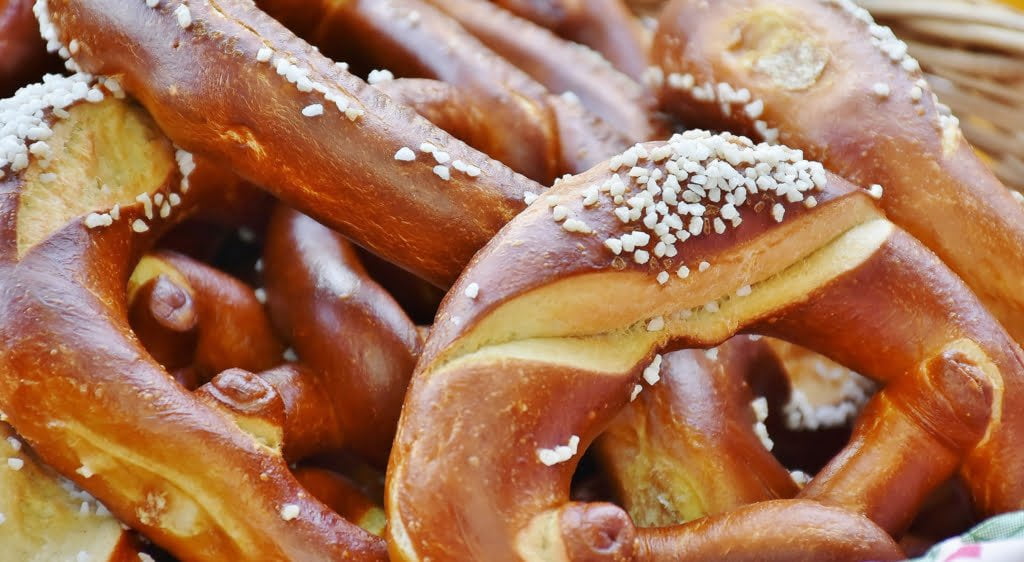
Brezeln (Pretzel)
A Brezel (or Brezeln) is better known in English as a pretzel. It is a baked pastry made from wheat dough that is traditionally twisted into a knot-like shape.
German pretzels are soft and baked. You can top yours with sea salt and grated cheese for a savory snack. They can also be covered with cinnamon sugar or nuts.
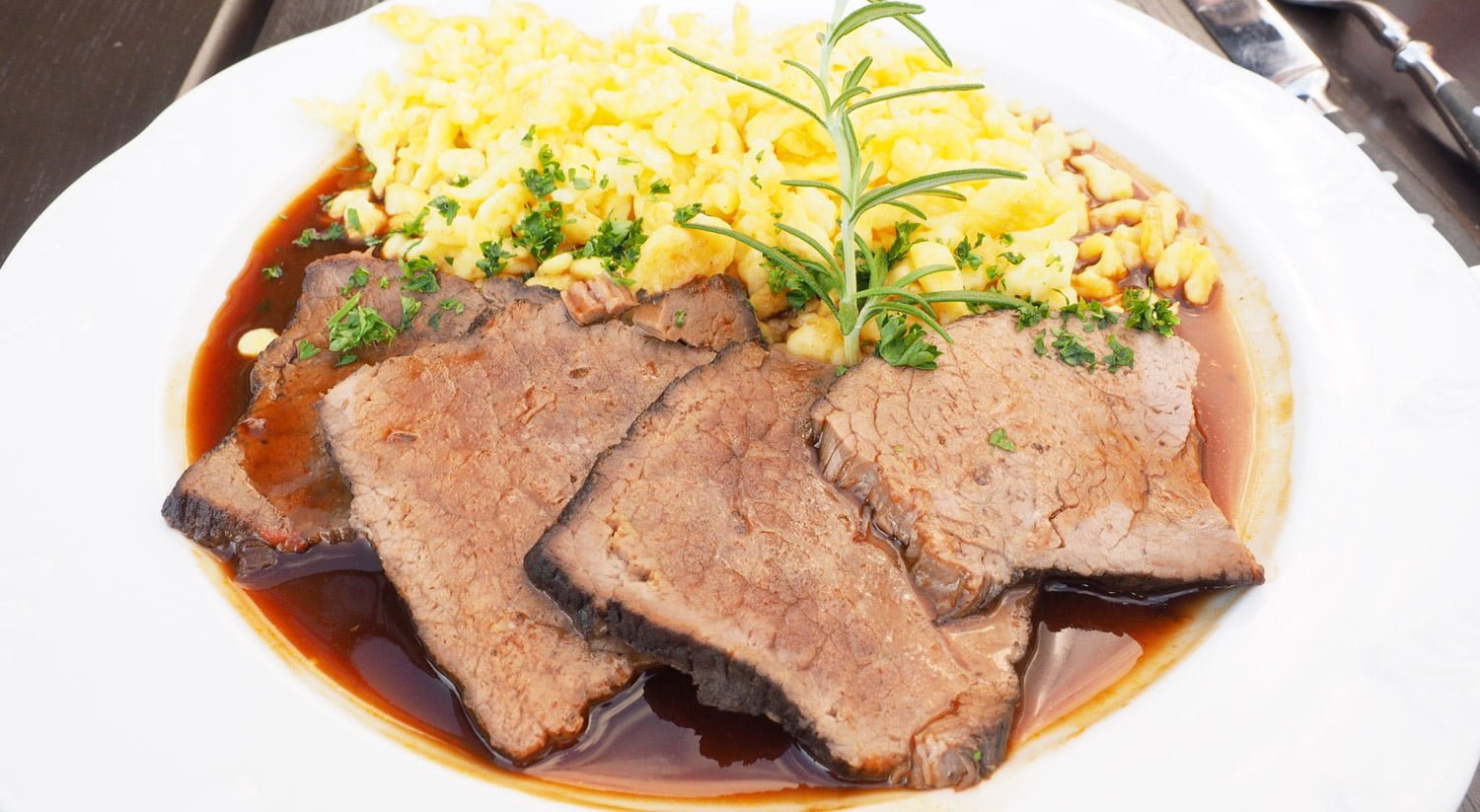
Sauerbraten
When it comes to great German culinary recipes, it is impossible not to mention “Sauerbraten.” It is also known as German pot roast or “sour roast.” You will taste both the sour and sweet flavors of the sauce at the same time.
You can choose from beef, veal, or pork versions.
After being marinated for many days, the rich flavor is enhanced, and the tenderness of the meat will make it unforgettable.
Charlemagne was the first to prepare this remarkable dish in the 9th century.
The 13th century was the period when this dish became widely popular.
Most restaurants in Saint Albertus Magnus or Saint Albert the Great feature this traditional dish on their menus.
People love preparing it for Sunday dinners and family gatherings, often using beef and venison.
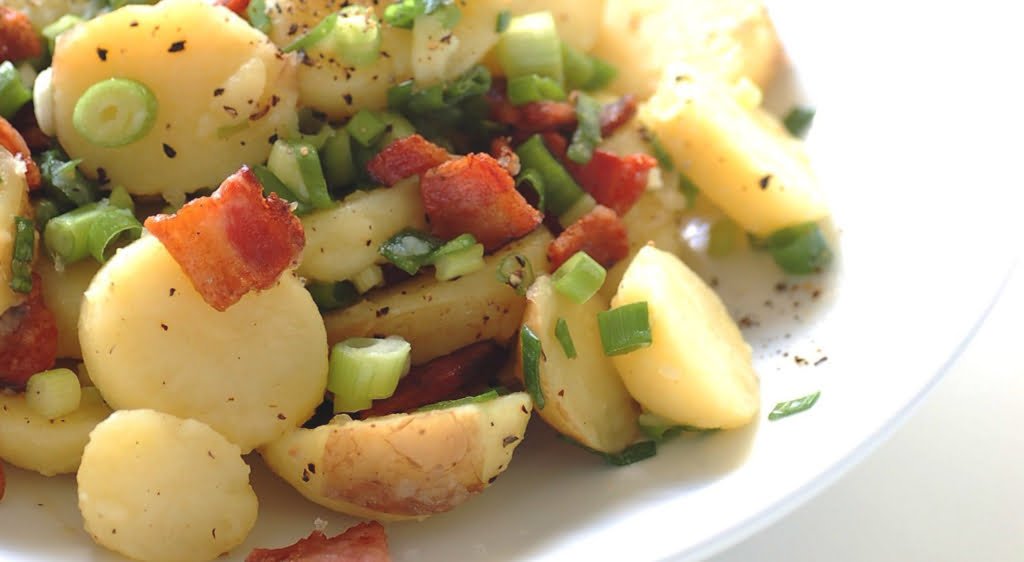
German Potato Salad
Potato salad accompanies many traditional German main dishes and is very easy to prepare. Potatoes are one of the most popular ingredients in German cuisine.
There are many varieties of German potato dishes because southern Germany is an ideal region for growing potatoes, and countless recipes have been developed around this versatile ingredient.
Unlike other potato salad recipes, German potato salad is primarily made with bacon, sugar, and white vinegar.
Likewise, if you prefer, you can also make a vegetarian and/or vegan version by adding cucumber, beetroot, pickles, and/or cabbage, all of which are very common in German cuisine.

Currywurst
Berlin cannot turn its back on its most famous invention, the delicious curry sausage.
In fact, around 70 million Currywursts are sold every year, and not only to tourists: a 2008 study reported that 80% of Germans consider Currywurst a staple food in their diet.
The story goes that one day in 1949, a woman named Herta Heuwer managed to obtain curry powder from British troops in Berlin. Back at her snack stand, she mixed the spice with some tomato sauce, added a pinch of salt, sugar, and Worcestershire sauce, and thus the Currywurst was born.
Today, there are thousands of snack stands across Germany selling these tasty sausages, usually sliced and served with French fries or a bread roll and an ice-cold German beer.
Grüne Soße
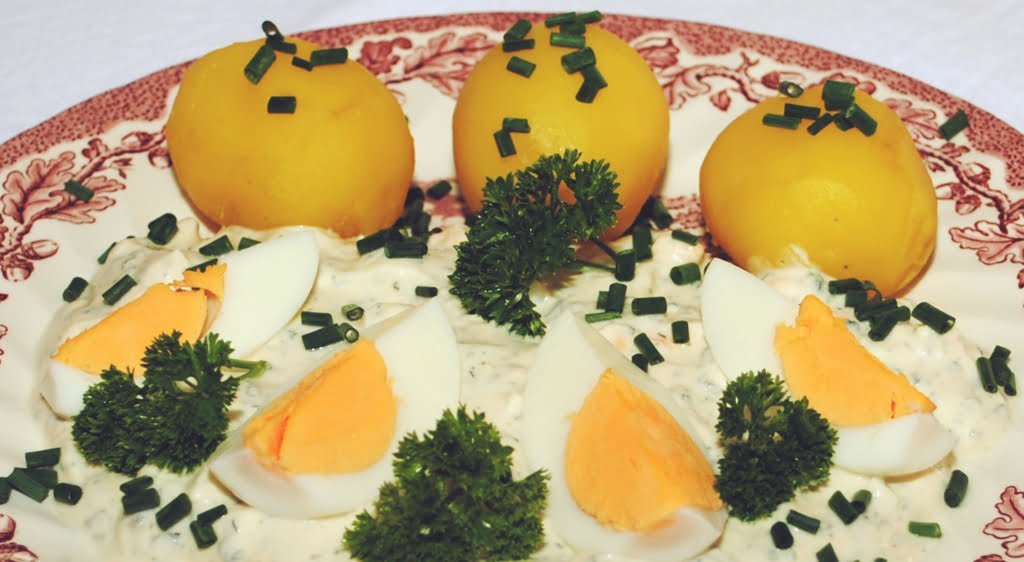
To conclude this list of traditional German dishes, we would like to introduce Frankfurt’s specialty and supposedly Goethe’s favorite sauce: Grüne Soße (green sauce), a mixture of sour cream, oil, vinegar, mustard, hard-boiled eggs, and seven herbs (parsley, chives, chervil, cress, borage, sorrel, and salad burnet).
The sauce has been granted protected status within the European Union, and there is even a monument dedicated to it in Frankfurt-Oberrad.
The green sauce, known as “Grie Soß” in the Frankfurt dialect, is usually served cold with boiled potatoes and hard-boiled eggs.
It is also sometimes used as a side dish for fish, asparagus, or roast beef. It even has a special place in certain Schnitzel dishes—most notably the Frankfurter Schnitzel—making it a true local specialty.
If you are planning to travel to Germany, don’t hesitate to try one of these traditional German dishes, and of course take the best pocket translator with you on your mobile phone!
Resources

German vocabulary exercises
Flashcards
Cargando flashcards…