
Albanian language
We help you translate your voice and any text into bengali and more than 125 languages.




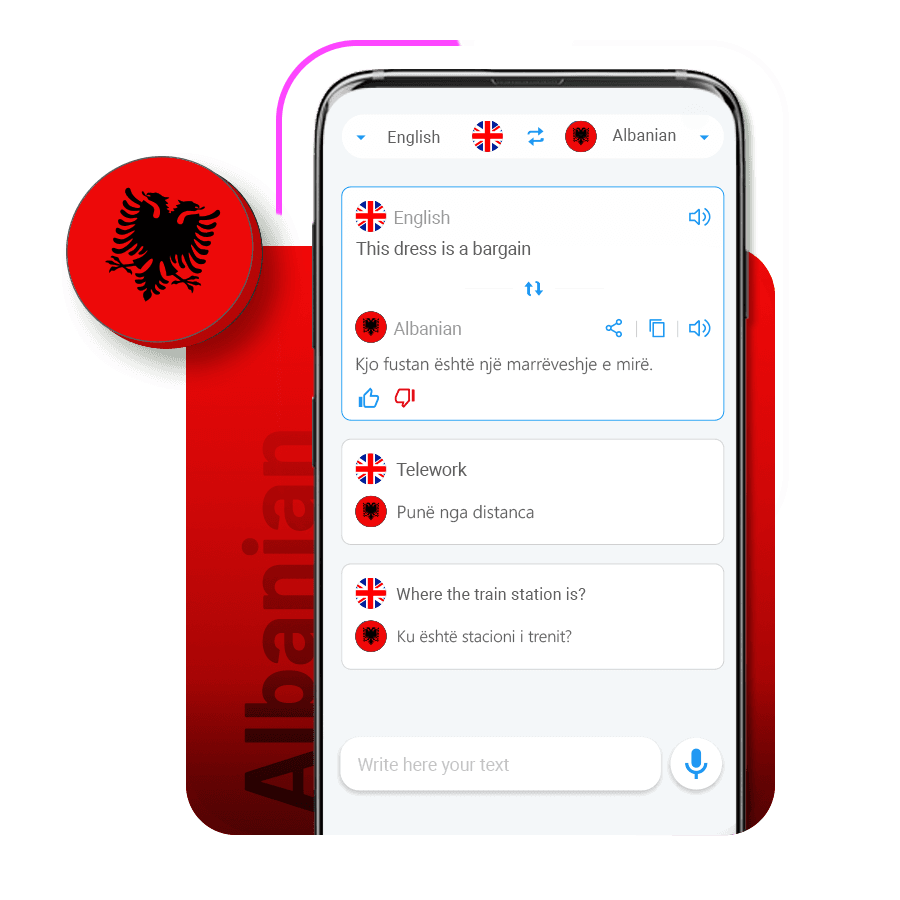
Why is it important to be able to translate into Albanian?

Where is it spoken?
Albania – Kosovo – North Macedonia – Montenegro – Italy – Greece – Turkey – Germany – Switzerland – United States

Number of speakers
More than 6 million native speakers.
Approximately 7.5 million speakers in total.

Language family
Indo-European family – Independent branch (Albanian)
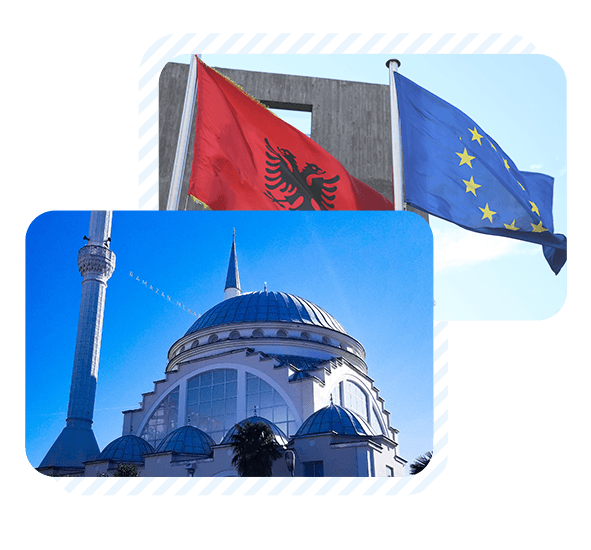
The Albanian language (gjuha shqipe) is a unique Indo-European language and an official language in Albania and Kosovo, as well as having co-official status in North Macedonia. It is spoken by more than 6 million people as a native language and reaches around 7.5 million when including second-language speakers and diaspora communities.
Translating into Albanian is essential to connect with countries in the Balkan peninsula and to facilitate commercial and cultural communication in the region. Furthermore, Albanian represents an independent branch within the Indo-European languages, giving it immense linguistic and historical value.
Thanks to the growth of trade in Southeastern Europe, tourism in the Albanian Riviera, and the strong presence of the diaspora in Europe and North America, having tools to translate into Albanian is increasingly valuable for businesses, travelers, and professionals.
Most translated languages into Albanian


Learn to speak the Albanian language like a true native
Advanced vocabulary
| Albanian | English |
|---|---|
| Përgjegjësi | Responsibility |
| Mundësi | Opportunity |
| Sfidë | Challenge |
| Bashkëpunim | Collaboration |
| Pavarësi | Independence |
| Sukses | Success |
Other curiosities about the Albanian language
- It constitutes an independent branch within the Indo-European languages. Albanian does not belong to any major subgroup (such as Romance, Germanic, or Slavic); it forms an independent and unique branch within the Indo-European language family.
- It has two main dialects. The language is traditionally divided into two dialects: Gheg (spoken north of the Shkumbin River) and Tosk (to the south), upon which the modern standard language is based.
- It uses the Latin alphabet with special letters. Since the Congress of Monastir in 1908, Albanian has used an adaptation of the Latin alphabet with 36 letters, including digraphs like dh, th, zh and characters with diacritics like ë and ç.
- It retains influences from the Balkan linguistic area. It features important shared traits with other neighboring languages in the Balkans, such as the postposition of the definite article (attaching the article to the end of the word).
- It has a strong cultural impact and diaspora presence. It is spoken in historical communities in Italy (the Arbëreshë) and Greece (the Arvanites), as well as by a growing diaspora in Central Europe and North America.


Enhance global communication with your voice. Our AI translator convert speech into any language.
We support the Albanian language across multiple services
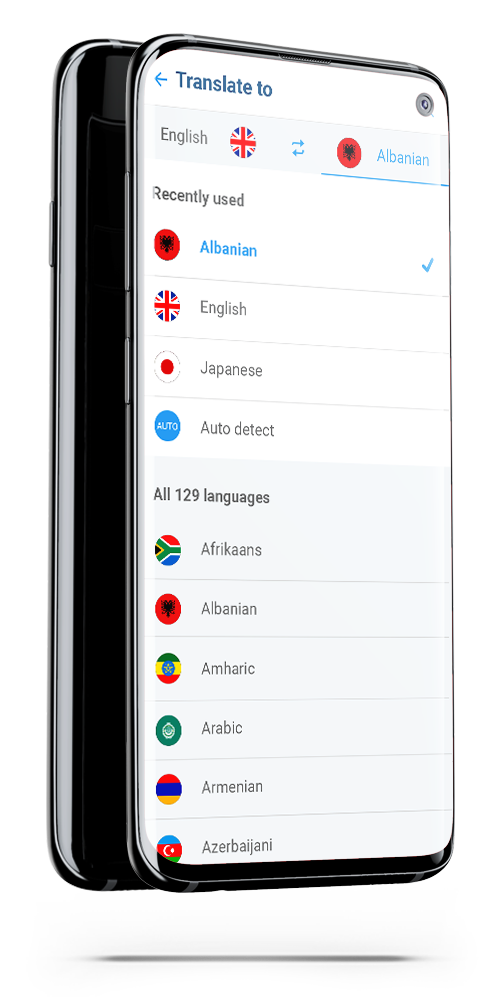

Audio and text translation
Translate Albanian between more than 125 available languages.

Remote conversation translation
Speak and translate into Albanian with people anywhere in the world remotely.

Real-time translation
Speak freely. Translate Albanian instantly in real time.

Learning with smart books
Expressions, essentials, culture, verbs, travel, and technical language all in one place.

Translation audio playback (TTS)
Listen to the Albanian translation audio to improve your pronunciation.

Speech recognition (STT)
Speak freely and let the app translate for you.


Enjoy the best advancements in artificial intelligence applied to translation
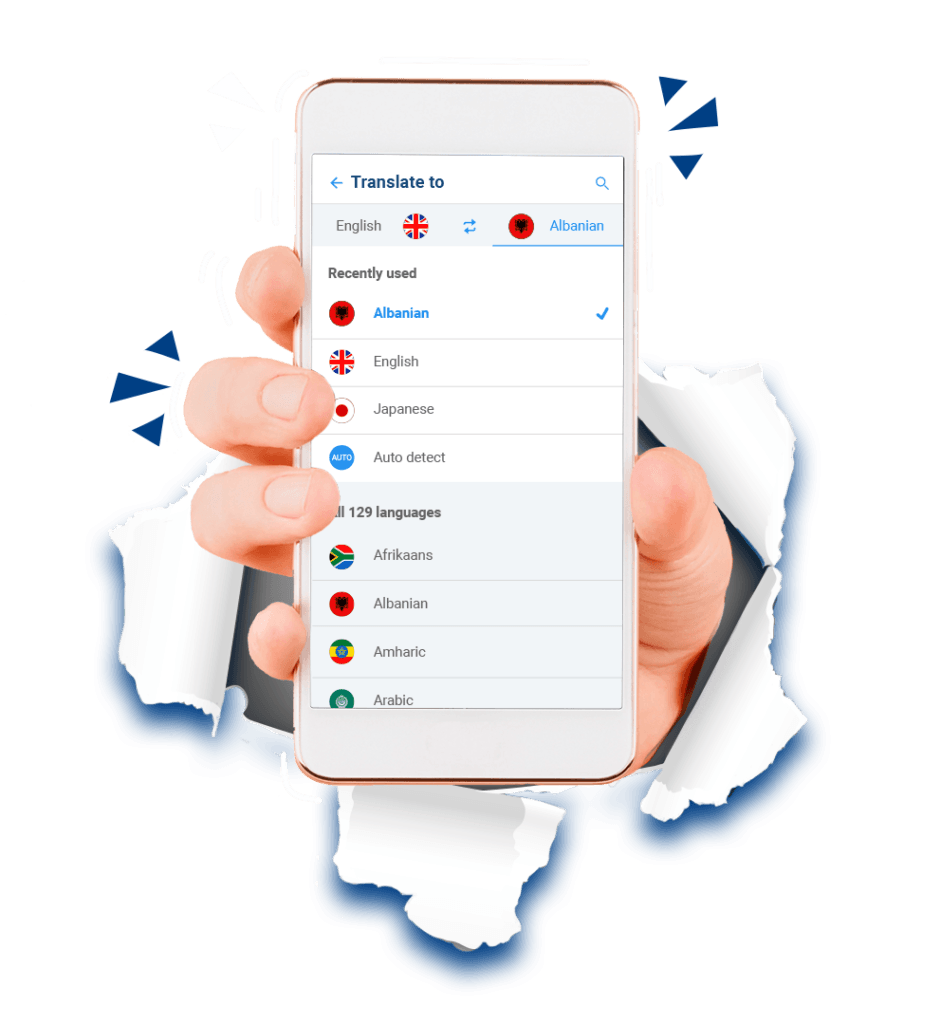
Translate to Albanian with the utmost