
Language translator to Urdu
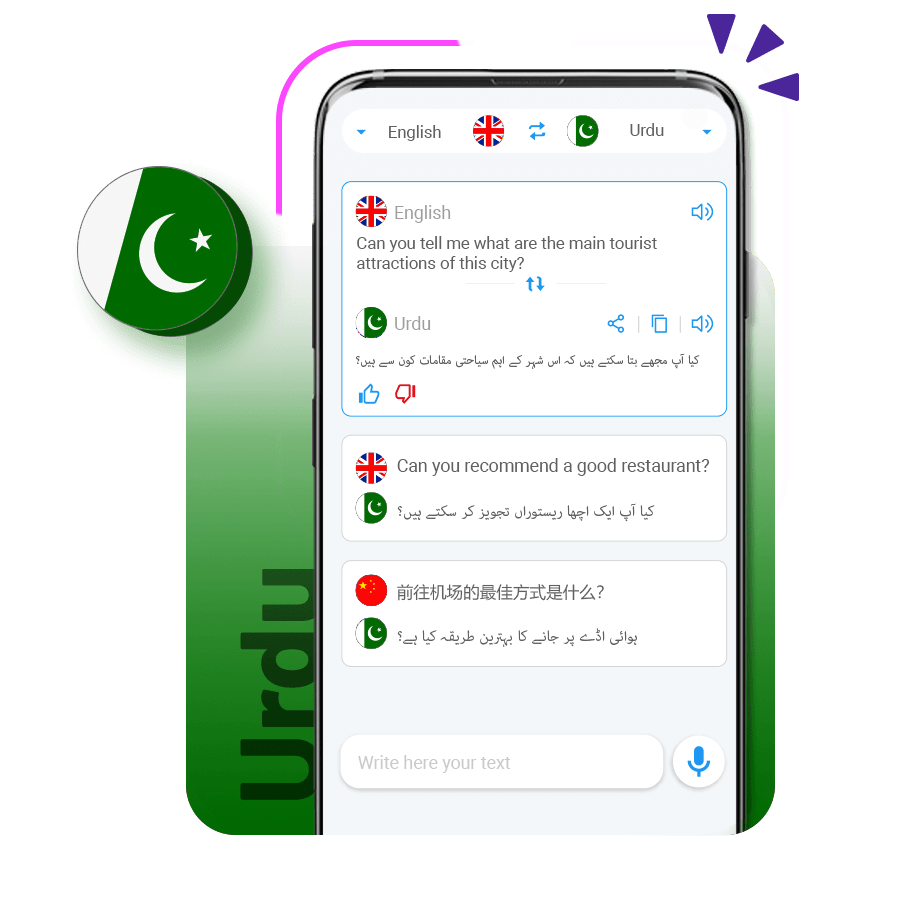
We help you translate your voice and any text into Urdu and more than 125 languages.




Why is it important to be able to translate into Urdu?

Where is it spoken?
Pakistan – India – United Arab Emirates – Saudi Arabia – United Kingdom – United States – Canada

Number of speakers
70 million (native speakers)
230 million worldwide.

Language family
Indo-European – Indo-Iranian – Indo-Aryan
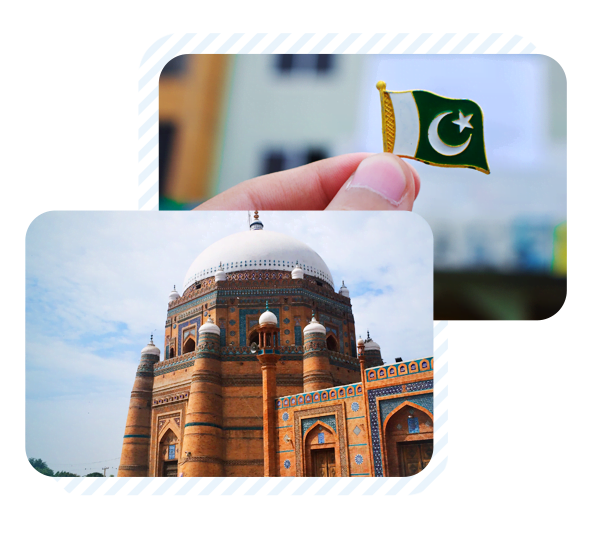
Translation into Urdu is becoming increasingly important due to the demographic and economic weight of South Asia. Urdu is the national language of Pakistan and one of the recognized languages in India, where millions of people use it in their daily lives, education, media, and culture.
With more than 230 million speakers, including native speakers and people who use it as a second language, Urdu facilitates communication with one of the most populated regions in the world. In addition, Pakistani and Urdu-speaking communities are present in many countries, such as the United Kingdom, Saudi Arabia, the United Arab Emirates, the United States, and Canada.
Urdu plays an important role in sectors such as international trade, customer service, immigration, education, tourism, and public services. Translating documents, websites, or conversations into this language makes it possible to reach millions of people and offer closer, more accessible communication.
From a cultural point of view, Urdu has one of the richest literary traditions in Asia, especially in poetry (ghazal and nazm), music, and Pakistani cinema. Its literature has influenced the entire Indian subcontinent for centuries.
For these reasons, being able to translate into Urdu not only facilitates communication with millions of people but also opens up business, educational, and cultural opportunities in a region of enormous international importance.
The Most Commonly Translated Languages into Urdu


Learn to speak Urdu like a native
Advanced vocabulary
| Urdu | English |
|---|---|
| ترقی | Development |
| معیشت | Economy |
| تعلیم | Education |
| ثقافت | Culture |
| ماحولیات | Environment |
| پائیدار ترقی | Sustainable development |
Other interesting facts about the Urdu language
- Urdu has been the national language of Pakistan since its independence in 1947 and serves as a common language among speakers of many regional languages.
- It shares much of its grammar with Hindi. Both languages are widely intelligible in everyday conversation, although they use different alphabets and part of their formal vocabulary comes from different sources.
- Urdu is written with a variant of the Perso-Arabic alphabet, known as the Nastaliq script, considered one of the most elegant calligraphic styles in the world.
- Its name comes from the Turkish word “ordu”, meaning “camp” or “army,” referring to the camps where speakers of different languages lived together during the Mughal Empire.
- It is one of the main languages of South Asian literature and has an extraordinary poetic tradition, especially in the genre known as ghazal.
- Millions of people speak Urdu outside Pakistan, especially in the Persian Gulf countries, the United Kingdom, North America, and other Pakistani diaspora communities.
- Urdu incorporates vocabulary from Persian, Arabic, Turkish, Sanskrit, and English, reflecting the cultural and historical diversity of the Indian subcontinent.
- It is one of the most widely used languages in Pakistan’s audiovisual industry, including television, music, and cinema (Lollywood).
- Most modern smartphones and operating systems offer full support for the Urdu language and its Nastaliq script.
- Due to the growth of Pakistan’s digital economy and e-commerce, demand for Urdu translations has increased significantly in sectors such as technology, education, tourism, and international trade.

Enhance global communication with your voice. Our AI translator convert speech into any language.
We support the Urdu language across multiple services
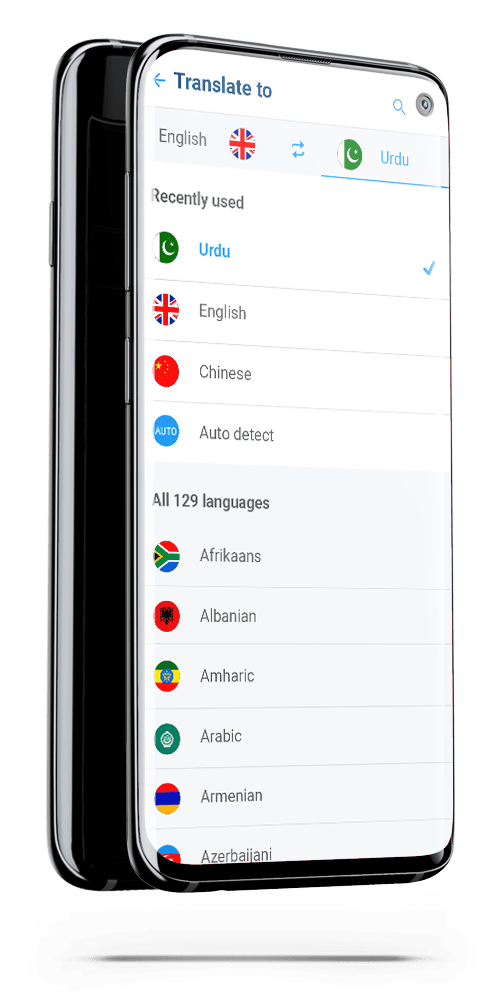

Audio and text translation
Translate Urdu to and from more than 125 available languages.

Remote conversation translation
Speak and translate into Urdu with people anywhere in the world remotely.

Real-Time translation
Speak freely. Translate Urdu instantly in real time.

Learning with smart books
Expressions, essentials, culture, verbs, travel, and technical language—all in one place.

Translation audio playback (TTS)
Listen to the Urdu translation audio to improve your pronunciation.

Speech recognition (STT)
Speak freely, and your app will translate for you.


Enjoy the best advancements in artificial intelligence applied to translation
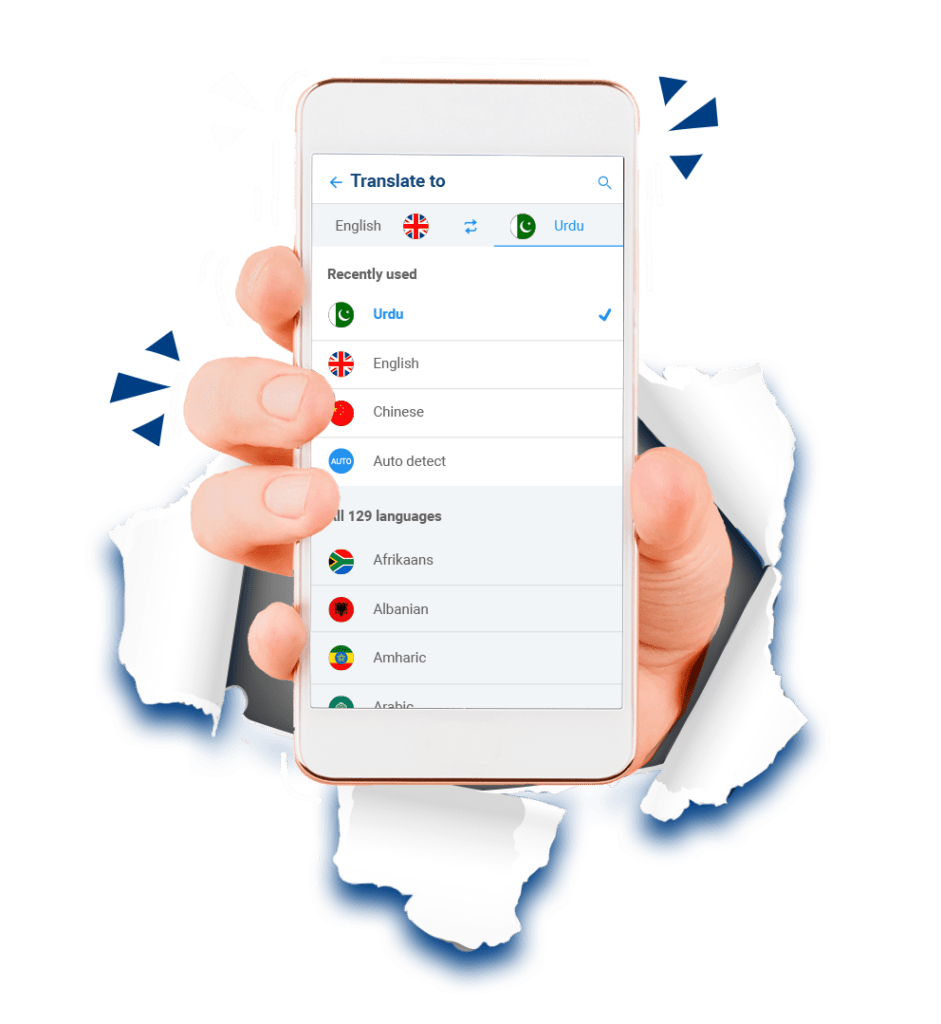
Translate to Urdu with the utmost