

Yoruba language
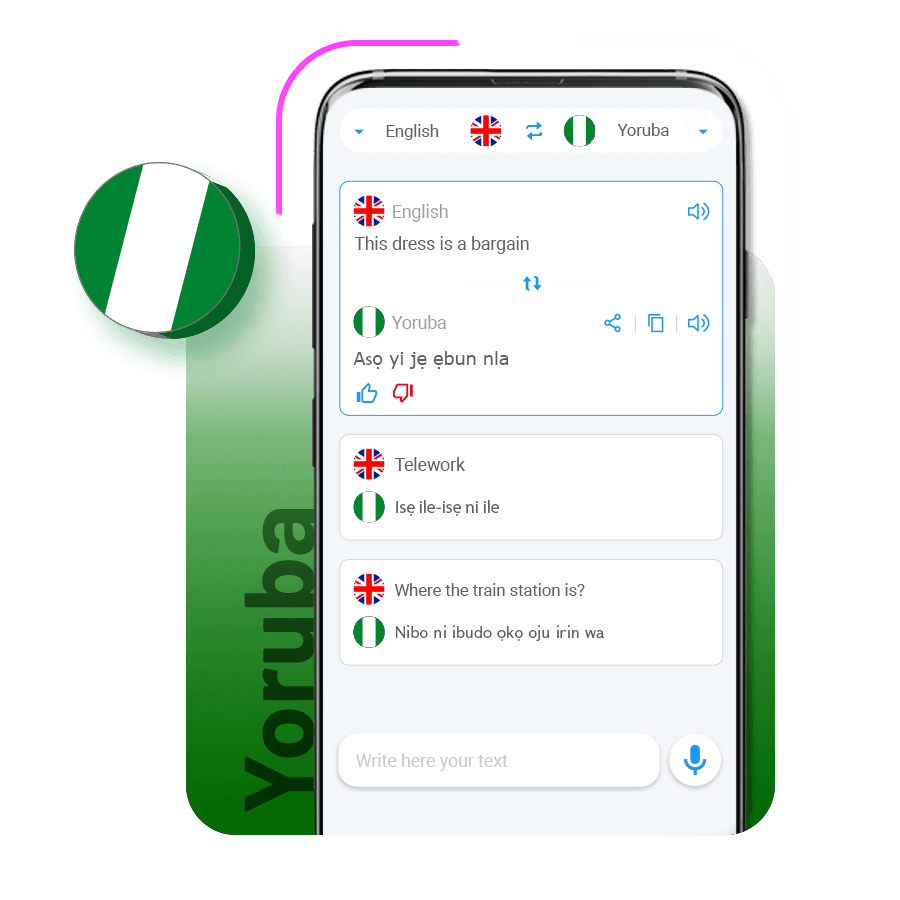
We help you translate your voice and any text into Yoruba and more than 125 languages.




Why is it important to be able to translate into Yoruba?

Where is it spoken?
Nigeria – Benin – Togo
United Kingdom – United States – Brazil – Cuba

Number of speakers
More than 45 million native speakers.
Around 50 million worldwide.

Language family
Niger-Congo – Volta-Niger – Yoruboid
Translation into Yoruba is becoming increasingly important due to the demographic and economic growth of West Africa. Yoruba is one of the most widely spoken African languages and plays a fundamental role in communication, education, culture, and commerce, especially in Nigeria.
With more than 45 million native speakers and around 50 million speakers in total, Yoruba is one of the main languages of Nigeria, Africa’s most populous country and one of the continent’s largest economies. It is also spoken in Benin and Togo and has a large diaspora across Europe, the Americas, and the Caribbean.
Translating into Yoruba provides access to a constantly growing market and improves communication in sectors such as e-commerce, education, healthcare, tourism, and public services. It is also becoming increasingly common in digital content, social media, and mobile applications.
From a cultural perspective, Yoruba has an ancient tradition of oral literature, music, theater, and religion. Its influence has reached many countries in the Americas through Afro-descendant communities, where many of its traditions remain alive.
For these reasons, being able to translate into Yoruba not only makes it possible to communicate with millions of people but also opens up business, educational, and cultural opportunities in one of Africa’s fastest-growing regions.

The most commonly translated languages into Yoruba


Learn to speak Yoruba like a native
Advanced vocabulary
| Yoruba | English |
|---|---|
| Ìdàgbàsókè | Development |
| Àṣà | Culture |
| Ìmọ̀ ẹ̀rọ | Technology |
| Ìṣúná | Economy |
| Ẹ̀kọ́ | Education |
| Ìdàgbàsókè alágbára | Sustainable development |
Other interesting facts about the Yoruba language
- Yoruba is one of the most widely spoken African languages, with tens of millions of speakers concentrated mainly in southwestern Nigeria.
- Yoruba uses the Latin alphabet, supplemented with diacritical marks that indicate both pronunciation and the three tones—high, mid, and low—which are essential for distinguishing the meanings of many words.
- The Yoruba language has one of the most important literary and oral traditions in West Africa, with a wealth of proverbs, folk tales, and poetry.
- Yoruba religion and culture have profoundly influenced Afro-American traditions such as Santería in Cuba, Candomblé in Brazil, and other religious practices in the Caribbean.
- There are significant Yoruba-speaking communities in countries such as the United Kingdom, the United States, Brazil, and Cuba due to the African diaspora.
- Yoruba is one of the African languages with the strongest presence in media, music, film, and digital content produced in Nigeria.
- Many universities around the world offer Yoruba language and culture programs because of its historical, linguistic, and anthropological importance.
- The language has a rich musical tradition that has influenced contemporary genres such as Afrobeats and other popular African styles.
- Thanks to Nigeria’s technological growth, demand for Yoruba translations continues to rise in sectors such as education, healthcare, e-commerce, and mobile applications.


Enhance global communication with your voice. Our AI translator convert speech into any language.
We support the Yoruba language across multiple services

Audio and text translation
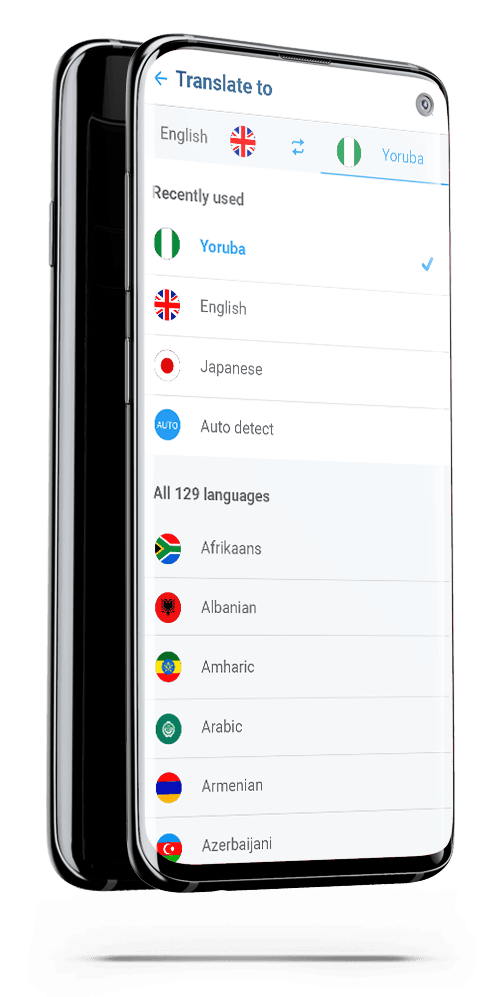
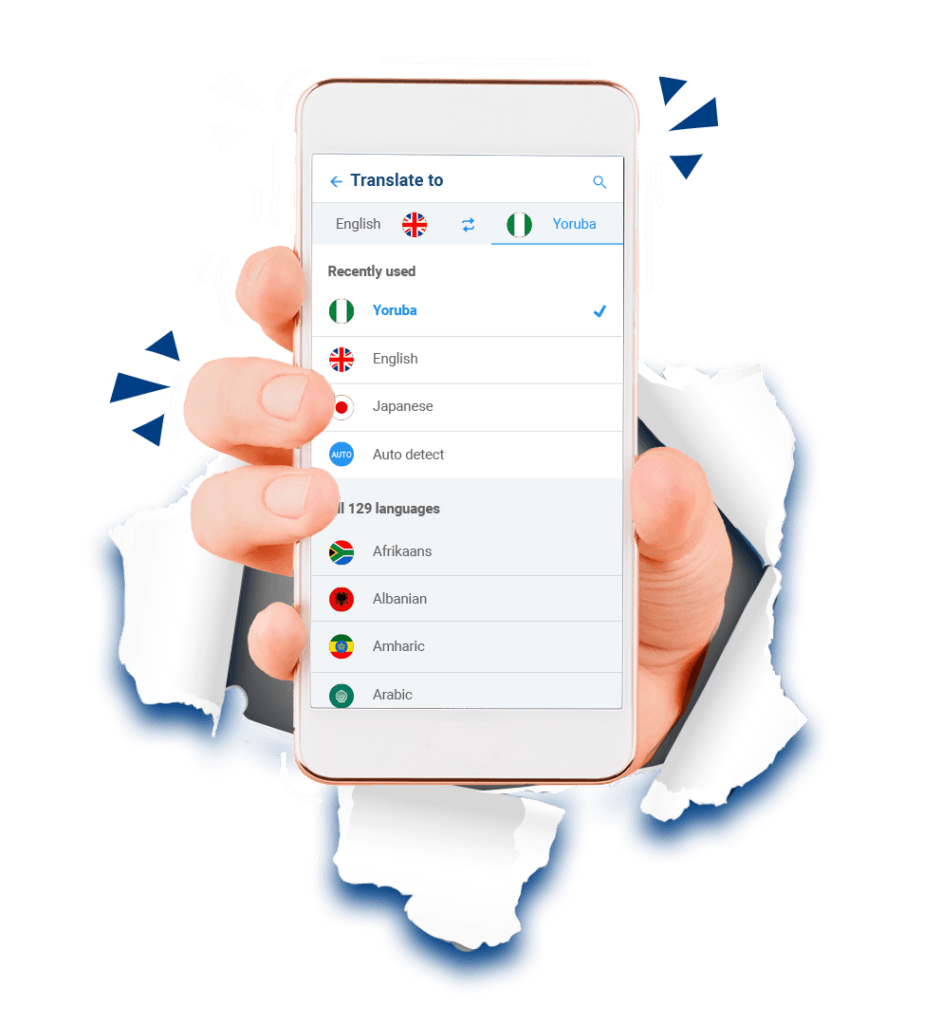
Translate Yoruba to and from more than 125 available languages.

Remote conversation translation
Speak and translate into Yoruba with people anywhere in the world remotely.

Real-Time translation
Speak freely. Translate Yoruba instantly in real time.

Learning with Smart Books
Expressions, essentials, culture, verbs, travel, and technical language—all in one place.

Translation audio playback (TTS)
Listen to the Yoruba translation audio to improve your pronunciation.

Speech recognition (STT)
Speak freely, and your app will translate for you.


Enjoy the best advancements in artificial intelligence applied to translation
Traduce al idioma Yoruba a la máxima